
Rethinking Data Center Duct Liner Specifications: A Glueless, Mechanically Retained Phenolic Liner Approach
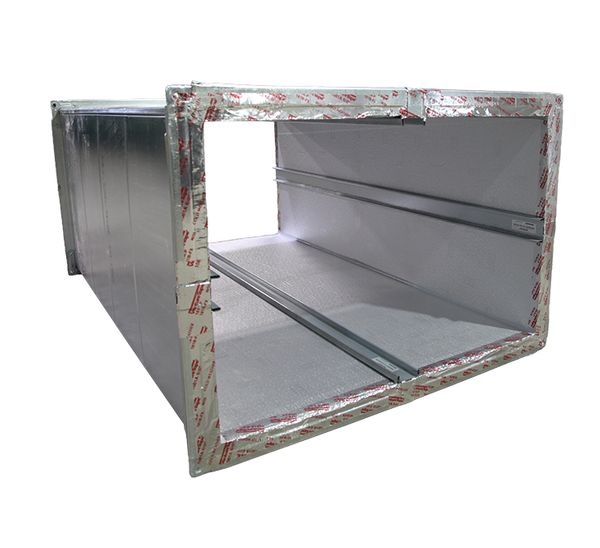
Traditional internally lined sheet metal ductwork typically relies on a combination of adhesive and mechanical fasteners to secure insulation to the duct wall. While this construction is well established, adhesive introduces additional variables into liner installation, including surface preparation, application rate, environmental conditions, and cure requirements.
Rigid phenolic duct liner provides an opportunity to approach retention differently.
Thermatuff® phenolic panels can be installed within sheet metal ductwork using a defined mechanical retention system that eliminates the need for adhesive. For engineers evaluating alternatives to traditional fibrous duct liner, this separates liner attachment from adhesive bond performance while maintaining the familiar construction of a sheet metal duct system.
A Glueless, Mechanically Retained Phenolic Duct Liner
Thermatuff® is a rigid, closed-cell phenolic insulation panel designed for use within commercial HVAC duct systems. When used as an internal duct liner, panels are mechanically retained using Thermaduct®s Tuff-Lock® liner retention clips or patented Airtruss® reinforcement system.
This construction eliminates field-applied adhesive as a component of the liner attachment system.
Instead, liner position is maintained through a defined mechanical attachment method. For the specifying engineer, that means liner retention does not depend upon variables associated with adhesive installation, including:
- Surface preparation
- Adhesive application
- Ambient conditions during fabrication
- Cure time
- Long-term adhesive bond integrity
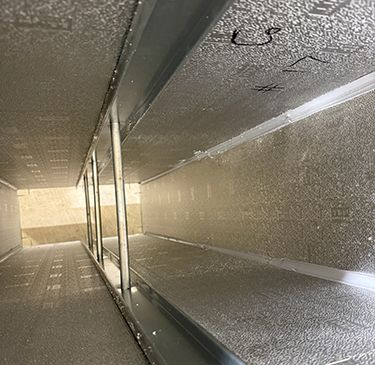
Airtruss®: Integrating Liner Retention and Duct Reinforcement
For larger duct sizes and higher-pressure applications, Thermatuff® can be incorporated with Thermaduct®'s patented Airtruss reinforcement system.
Airtruss® creates an internal reinforcement assembly between opposing duct surfaces, transferring structural loads through dedicated reinforcement components rather than relying on the phenolic insulation itself for reinforcement.
This allows two functions to be addressed within the same assembly: mechanical retention of the phenolic liner and reinforcement of the sheet metal duct.
For engineers, this provides a defined construction method for applications where liner retention, duct size, pressure, and structural performance must be considered together.
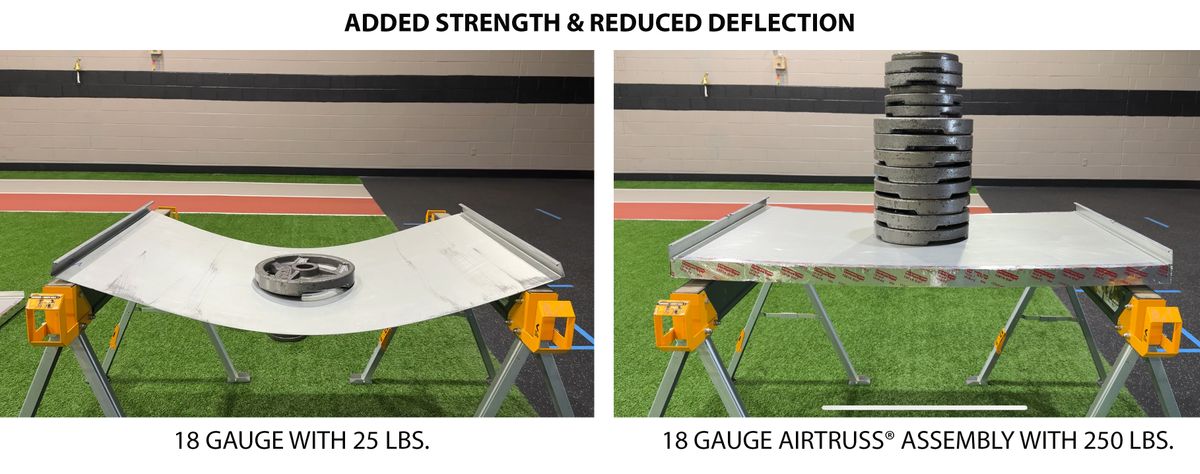
Non-Fibrous, Non-Perforated Airstream Surface
Thermatuff® combines a rigid, closed-cell phenolic core with an 80-micron aluminum facing and zero facing perforations. The result is a smooth, non-fibrous airstream surface rated for air velocities up to 6,000 fpm when installed in accordance with Thermaduct® requirements.
The continuous aluminum facing provides a durable surface over the phenolic insulation and supports vapor and moisture control when panel seams, edges, and penetrations are properly sealed as part of the completed assembly.
For engineers, this provides a rigid phenolic duct liner that addresses airstream surface integrity, liner stability, moisture control, and high-velocity performance within a single mechanically retained system.
Fire and Smoke Performance
Material fire performance remains a fundamental consideration when specifying any duct insulation or liner.
Thermatuff has been tested in accordance with ASTM E84, Standard Test Method for Surface Burning Characteristics of Building Materials, and does not exceed:
- Flame Spread Index: 25
- Smoke Developed Index: 50
These characteristics support the material requirements applicable to duct insulation and lining under NFPA 90A when the product is used within its approved application and construction.
Rather than relying on a generic description such as phenolic insulation, engineers can reference documented surface-burning performance directly within the specification.
Built for Large Data Center Duct Systems
Data center HVAC systems frequently require large duct sections operating continuously at substantial airflow and pressure. At that scale, liner retention and duct reinforcement become part of the design and not simply fabrication details.
Thermatuff® provides engineers with defined mechanical retention and reinforcement methods based on the demands of the duct construction. Tuff-Lock® provides mechanical liner retention, while Airtruss® is used where additional reinforcement is required for larger duct sizes and higher static pressures.
This gives engineers a defined construction methodology for addressing duct size, pressure, reinforcement, and liner retention together, rather than leaving those decisions to be resolved independently during fabrication.
It's Not Just the Insulation... It's How You Use It!
The performance of a duct liner depends on both the insulation material and how that material is incorporated into the duct system.
Thermatuff® combines a rigid closed-cell phenolic core, 80-micron non-perforated aluminum facings, and defined mechanical retention methods within conventional sheet metal duct construction. Tuff-Lock® retention clips provide a glueless liner attachment method, while Airtruss® integrates mechanical liner retention with structural duct reinforcement where required.
For engineers evaluating alternatives to traditional internally lined ductwork, the distinction is straightforward: instead of relying on adhesive to establish and maintain the bond between the insulation and sheet metal, Thermatuff® uses a mechanically defined method of retention.
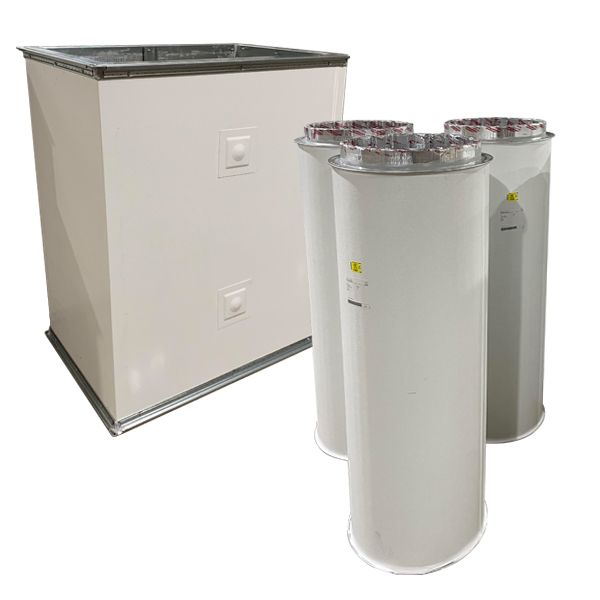
Pre-insulated ductwork can provide a smarter approach to HVAC Energy Savings
Choosing pre-insulated ductwork is one of the most direct and effective ways to enhance your building’s energy efficiency. From superior thermal performance and air sealing to code compliance and simplified installation, insulated duct solutions from Thermaduct® are engineered to deliver measurable results.
If you find yourself wanting to increase the efficiency of your duct systems, both indoor and out, talk to your Local Thermaduct® Expert or Contact Us to help you develop a plan for your building.
Related Articles

As energy codes push the required insulation values higher and higher, the need for better outdoor duct solutions is growing. Thermaduct® products are designed to meet the needs of outdoor applications with a high level of energy and installation efficiency.

Low air leakage, IAQ duct solutions increase the energy efficiency and health of your building. Thermaduct® is here to help. Our indoor products are lightweight solutions that reduce installation weight by over 70%.